How an engagement runs, from kickoff to the ongoing month
Native advertising rewards patience in the first weeks and discipline afterward. This page describes what happens in the first 30, 60 and 90 days of working with us on Taboola and MGID, what we need from you at each stage and what a normal month looks like once the campaigns are established.
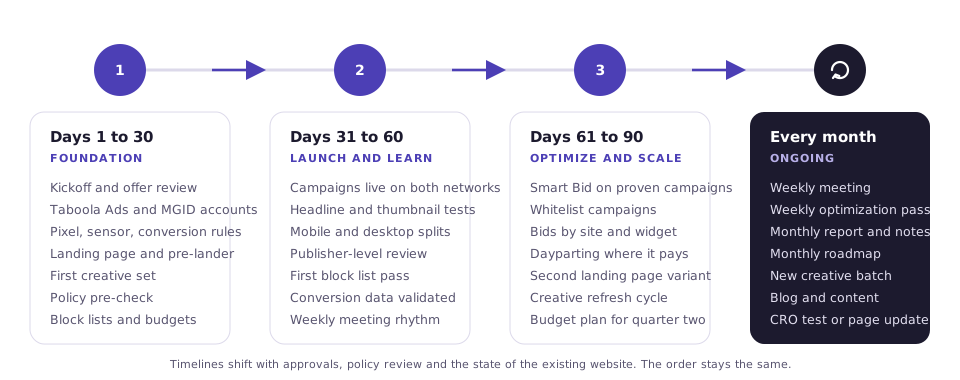
Three phases, each with a clear exit
Dates shift with approvals, platform review times and the state of your existing website. The order never changes, because each phase depends on the one before it.
Build everything the campaigns will depend on
The engagement starts with a kickoff call and a short questionnaire about your offer, margins, sales process, seasonality and existing assets. Within the first week we deliver the strategy document: the angle we will lead with, the conversion event we will optimize toward, the budget split between Taboola and MGID and between mobile and desktop, the bidding plan and the target cost per acquisition we are working toward.
While you review the strategy, we open the accounts. Taboola Ads and MGID advertiser accounts go in your company name with your payment method. We install the Taboola Pixel and MGID sensor through a tag manager, define conversion rules and goals, set up GA4 and test every event on real devices. In parallel we build or repair the landing pages and write the first pre-lander, then produce the first headline and thumbnail set. Everything goes through a policy pre-check and your approval before it is submitted to the platforms.
Exit criteria: accounts live, tracking verified, pages approved, first creative approved and submitted for review, initial block lists and budgets in place.
Spend carefully, read everything
Campaigns go live on both networks with capped daily budgets, manual CPC bids and separate campaigns for mobile and desktop. The goal of this phase is information, not volume. We want to know which headlines earn clicks, which thumbnails hold up, which publishers send readers who convert and which send readers who bounce in two seconds.
We check spend and anomalies daily and make the first block list pass as soon as sites show enough clicks without conversions. Creative tests run in small batches, and losing items are paused quickly so budget concentrates on the angles with signal. Conversion data is reconciled between the platforms, GA4 and your CRM or store, so when we read a cost per acquisition we trust it. The weekly meeting starts in this phase and never stops.
Exit criteria: a readable picture of CPA by publisher, device and creative on each network, a shortlist of sites to whitelist and a second creative batch ready.
Move money toward what works
With real data, the structure changes. Proven publishers move into whitelist campaigns with their own budgets and bids by site and widget. Campaigns with enough conversion volume switch to Smart Bid or maximize conversions while a manual CPC campaign stays on as a control. Dayparting is applied where the data supports it, and budgets shift between Taboola and MGID based on marginal cost per acquisition rather than on habit.
The landing page work continues. A second pre-lander variant or a structural test goes live, briefed from what the first month taught us about reader objections. The creative refresh cycle becomes routine, with a new batch every two to three weeks. At the end of the phase you receive the 90-day review: what we built, what we learned, where we are against the target and the budget plan for the next quarter.
Exit criteria: scaled campaign structure on both networks, documented learnings, a quarter two budget and the standing monthly rhythm in place.
The rhythm that compounds
After the launch phase, management runs on a fixed cadence. Every week there is a meeting and an optimization pass with written notes: publisher-level CPA review, block list and whitelist updates, bid changes by site, device and daypart adjustments and creative rotation. Every two to three weeks a new creative batch goes to you for approval. Every month you receive the written report, the roadmap for the next month, new content for your site and one structured conversion test or page improvement.
Once a quarter we step back and review goals, budgets and the overall plan, including whether to add angles, enter new geographic markets or build new landing pages. The accounts, pages, dashboards and documents remain yours throughout.
What we need from you
We handle the work, but a few inputs only you can provide. Engagements that move fastest have one decision-maker who can answer within a business day and a sales team willing to tell us which leads were good.
- A single point of contact with authority to approve pages, creative and budgets.
- Access to your domain registrar, hosting and any existing analytics, or permission for us to create them.
- A company payment method for the Taboola Ads and MGID accounts.
- Product photos, brand guidelines and any claims documentation you already have.
- Feedback on lead or order quality, ideally weekly, so we can optimize toward real revenue.
- Attendance at the weekly meeting, or a delegate who can make decisions.
When we recommend changing course
We write the decision points into the 90-day plan so nobody has to argue about them later. If the first creative batches cannot earn a click-through rate that keeps CPC within range, we rework the angle rather than raising bids. If publishers convert but the sales team reports poor lead quality, we tighten the pre-lander and the form before scaling. If one network outperforms the other by a wide margin after a fair test, budget follows the results.
If after a fair test native advertising is not producing acceptable economics for your business, we say so in writing and recommend what to do instead. You keep every asset we built, and you are free to walk away with 30 days of notice.
Want the 90-day plan for your business?
Request a proposal and we will map these phases to your offer, your budget and your existing assets, with a clear price and a start date.